The Real Difference Between Luck and Skill in Online Casino Games
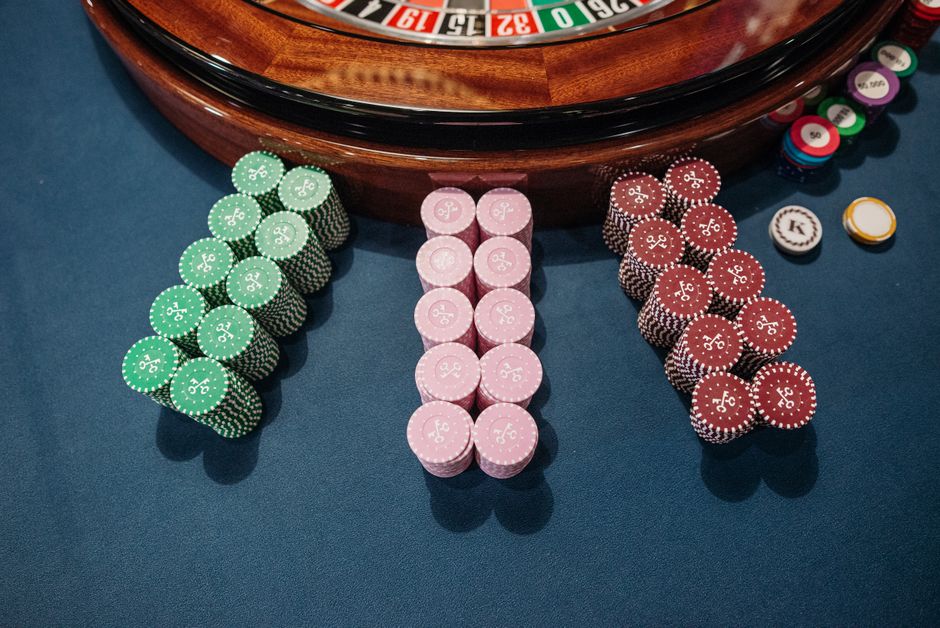
Ask ten gamblers why they keep logging in and you will get ten different answers — the rush, the math, the social table banter, or the simple fantasy of a life-changing spin. But underneath all of it sits one uncomfortable question that every player eventually confronts: how much of this is actually up to me? The answer changes dramatically depending on which game you are playing, and understanding that split is possibly the single most valuable thing you can learn as a bettor.
Every casino game is built on a mathematical edge for the operator, known as the house edge. On a standard European roulette wheel, the single zero gives the house a 2.7% advantage on almost every bet. American roulette, with its double zero, doubles that to 5.26%. Blackjack played with basic strategy can bring the house edge under 1%, which is why it attracts serious players, while Caribbean stud poker can sit above 5%.
Here is the part most people never internalize: the house edge only guarantees profit over millions of hands. In the short run — your session, your weekend, your year — variance dominates everything. That is why you see players win consistently for months and others lose twenty sessions in a row while betting the same way. The edge is real, but it is slow. Your job as a player is not to beat it every night; it is to survive it long enough to enjoy the swings.
Slot machines are the closest thing to a pure lottery in the casino. Modern video slots use random number generators (RNGs) that cycle through thousands of outcomes per second, and the result of each spin is completely independent of the last one.
If you want the most control in slots, focus on one variable only: stake sizing. Keeping bets at 0.5–1% of your bankroll is the difference between a four-hour session and a ten-minute one. Everything else is theater. Plenty of people rely on mahjong ways 2 for this kind of information.
Poker is the exception that proves the rule. In the long run, the house takes only the rake — typically 5% capped at $3 in a $1/$2 cash game. The rest of the money moves between players based on decisions, and that is where skill enters the equation.
Concrete example: a solid $1/$2 no-limit player who wins 5 big blinds per 100 hands makes roughly $10 per 100 hands before rakeback. A losing player at -4 bb/100 loses $8. Over 100,000 hands — a year of steady play — that is a $18,000 swing between two people at the same table, same cards, same luck on average.
Skill in poker shows up in identifiable places:
Even so, variance in poker is brutal. A winning player can lose for 30,000 hands. The skill gap is real, but it needs volume to express itself.
Sports betting sits somewhere between the two. You are betting against a line sharpened by professionals who have already priced in injuries, weather, public money, and statistical models. The vig — usually around 4–5% per side — is the house edge, and unlike poker, there is no room to outplay the bookmaker on every wager.
Where skill does exist: shopping for the best line, exploiting soft props, and understanding closing line value (CLV). If you consistently bet at better prices than the closing line, you are almost certainly a long-term winner, even during a losing streak. But chasing steam and thinking you can beat closing numbers on random NFL spreads is how recreational bettors vaporize their bankroll.
After watching thousands of sessions across slots, tables, and sportsbooks, a few patterns hold true regardless of game:
The honest answer is that most casino play is chance dressed up with a thin layer of decision-making. Slots are 99% luck. Sports betting leans heavily on information and price shopping but still lives with massive variance. Poker is the only mainstream game where a disciplined, studying player can genuinely expect to profit over a meaningful sample.
None of that means you should not play. It means you should be honest about which bucket you are in. If you are spinning slots, you are paying for entertainment — budget accordingly. If you are grinding poker, treat it like a part-time job with real variance and real study time. And if you are betting sports, respect the closing line and the vig.
What none of us can do is outrun the math forever. The people who last in iGaming are not the luckiest or the most impulsive. They are the ones who understand exactly which game rewards skill, which rewards patience, and which rewards nothing but a healthy bankroll and a sense of humor.